

Muscle Stimulation
Targeted neuromuscular electrical stimulation (NMES/EMS) to overcome arthrogenic muscle inhibition, re-educate dormant motor units, and accelerate active recovery.
Clinical Approach to Muscle Stimulation
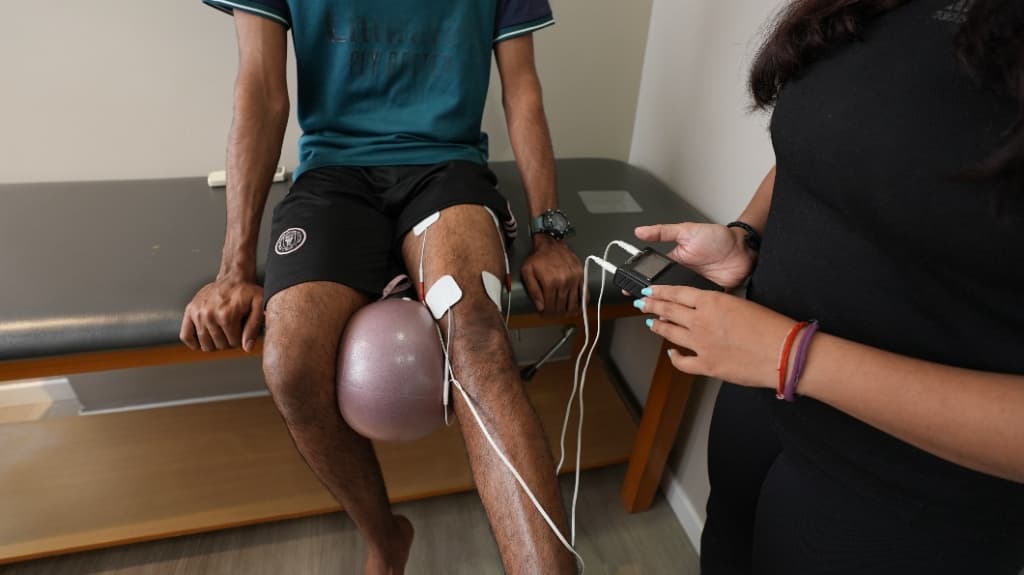
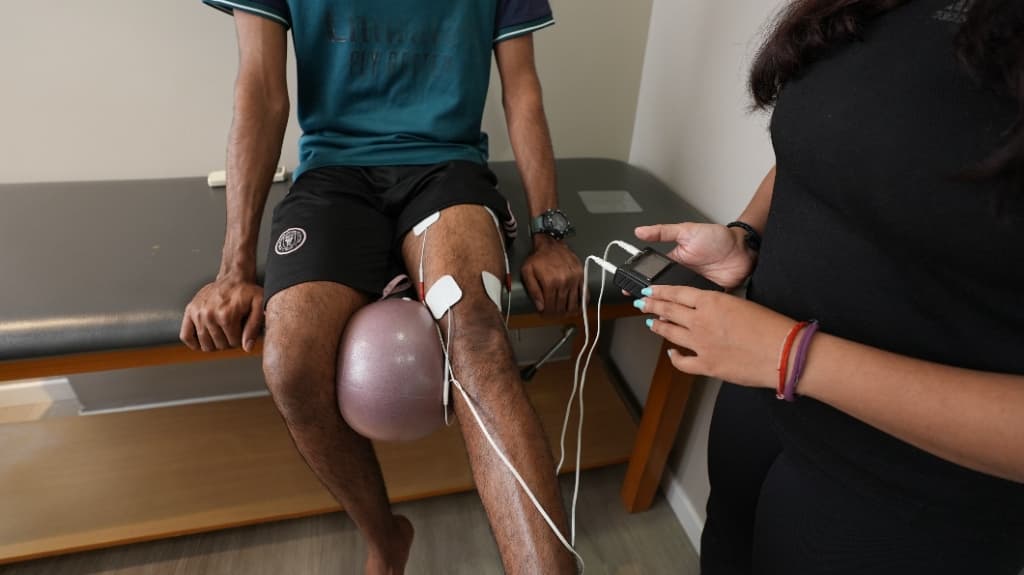
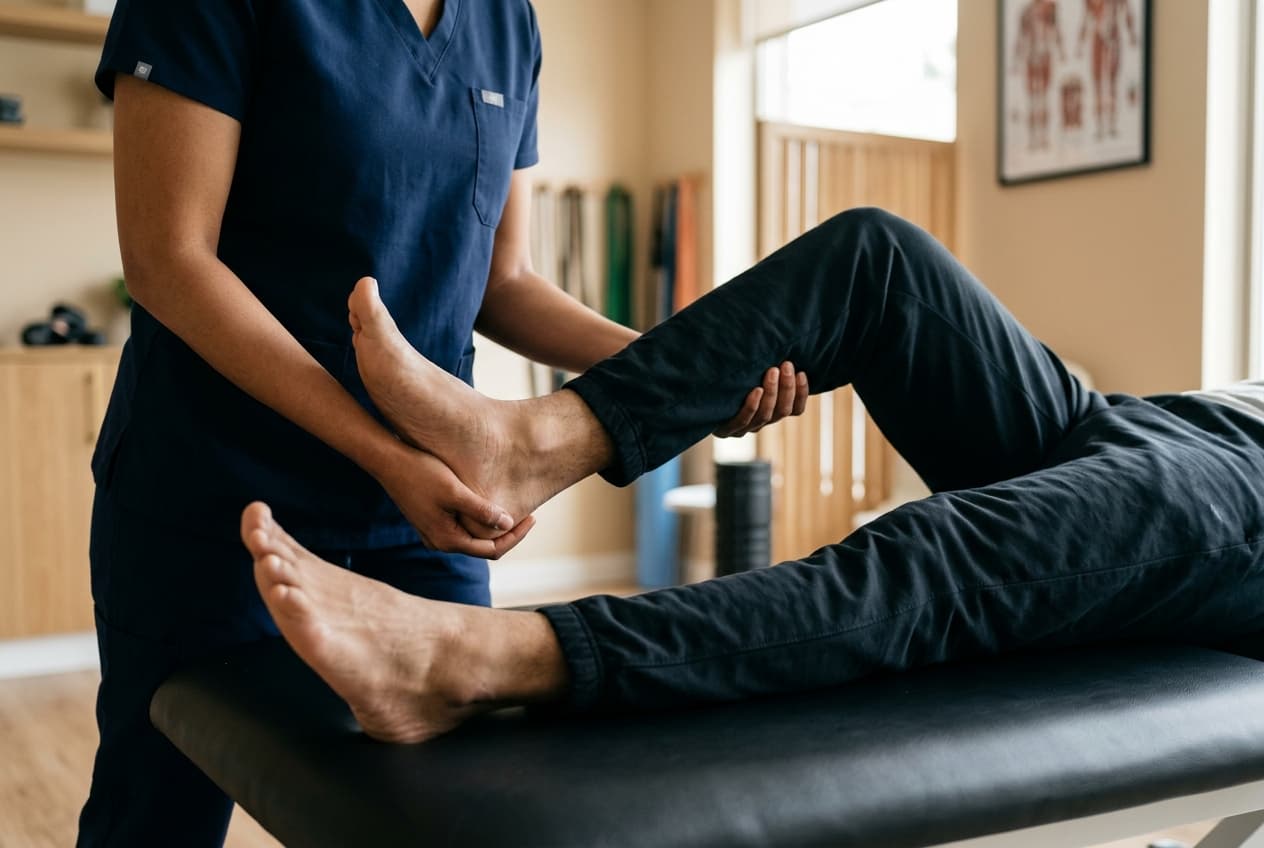
Clinical neuromuscular electrical stimulation (NMES) for vastus medialis (VMO) quadriceps reactivation at Zen Physio Nashik.
Common Symptoms
- Arthrogenic Muscle Inhibition (AMI) — inability to voluntarily contract the quadriceps or shoulder muscles post-surgery or trauma.
- Severe muscle weakness and atrophy following knee surgery (ACL reconstruction, meniscus repair, or total knee replacement).
- Poor motor unit recruitment and muscle timing deficits during active movement.
- Acute muscular spasms and reflex guarding following spinal or joint injuries.
Biomechanical Causes
Following joint effusion, trauma, or surgery, spinal reflex loops actively shut down voluntary muscle firing to protect the joint (Arthrogenic Muscle Inhibition). Neuromuscular Electrical Stimulation (NMES) bypasses central inhibition by delivering controlled electrical impulses directly to motor nerve terminals to re-educate muscles in Patellofemoral Pain Syndrome, Stroke Rehabilitation, and Bell's Palsy, forcing synchronous contraction of deep Type II muscle fibers and restoring the neural recruitment pathway.
What to Expect:
Electrode pads are placed precisely over the target motor points (such as the VMO or rectus femoris). Your clinical physiotherapist gradually adjusts the stimulation intensity to produce a rhythmic, robust yet comfortable muscle contraction, often synchronized with voluntary active exercises like knee extensions or ball squeezes.
Treatment Benefits & Objectives:
- Overcomes neural inhibition and restores voluntary quadriceps and limb control.
- Prevents rapid disuse muscle atrophy during non-weight-bearing recovery phases.
- Restores brain-to-muscle neuromuscular communication and movement coordination.
- Enhances local blood circulation, accelerating the removal of inflammatory edema.
Recovery Path Milestones
Motor Point Mapping & Baseline Recruitment
Identifying optimal motor point placements and eliciting comfortable, involuntary contractions to break inhibition.
Active-Assisted Isometric Synchronization
Combining electrical stimulus with patient voluntary isometric squeezes (e.g. adductor ball squeezes, quad sets).
Dynamic Functional Load Retraining
Progressing stimulation into dynamic weight-bearing motions (mini-squats, step-downs, and terminal knee extensions).
Transition to Voluntary Muscle Independence
Weaning off electrical assistance as voluntary motor firing reaches 90%+ symmetry with the unaffected limb.
Frequently Asked Questions
Ready to Resolve Muscle Stimulation?
Book a personalized 1-on-1 diagnostic evaluation and treatment plan for Muscle Stimulation today.