

Muscle Testing
Precision manual and dynamometric muscle testing protocols to quantify athletic strength deficits, isolate neuromuscular inhibition, and guide return-to-play clearance.
Clinical Approach to Muscle Testing
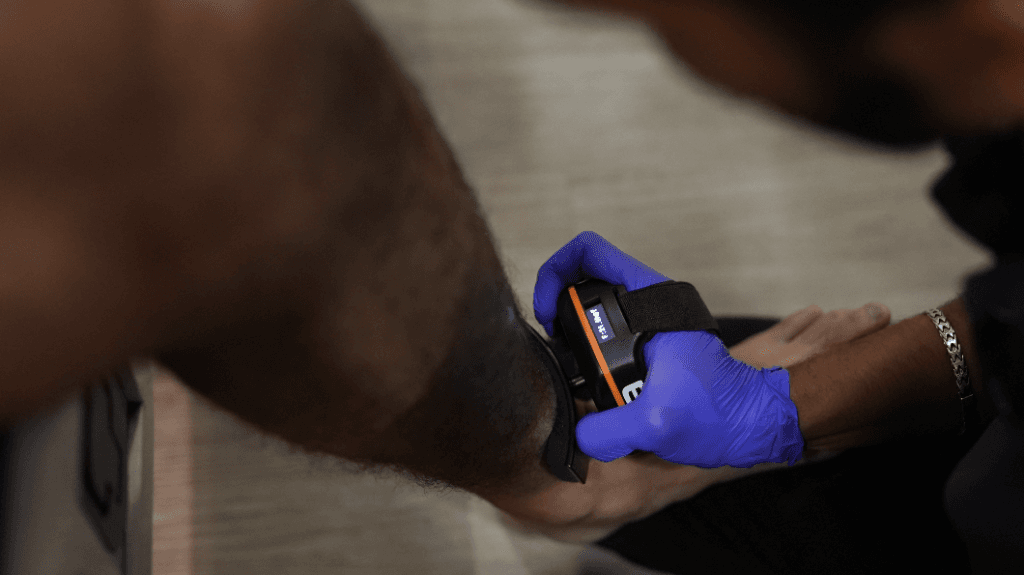
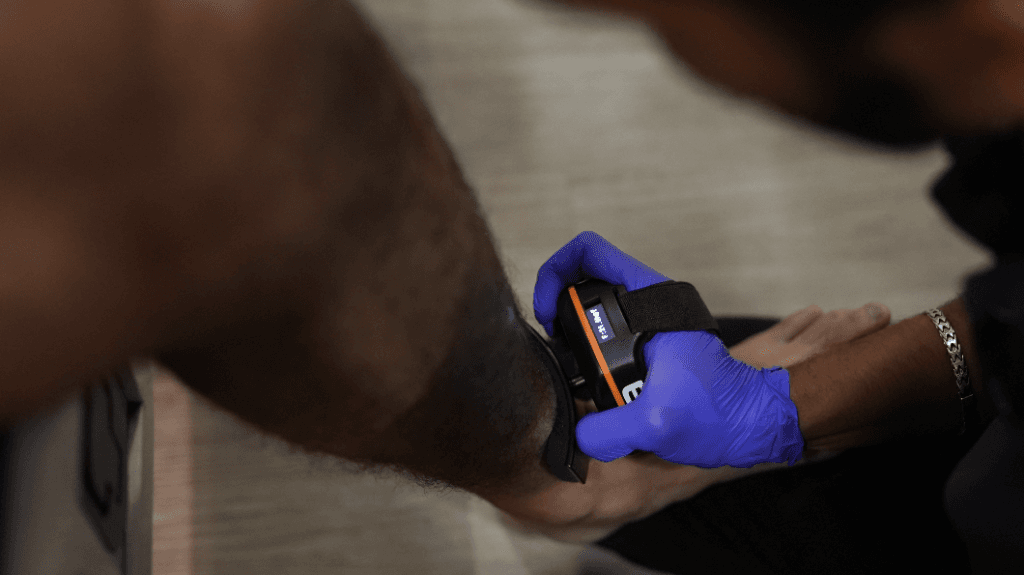
Digital handheld dynamometry quantifying peak isometric muscle torque and limb symmetry index (LSI) at Zen Physio Nashik.
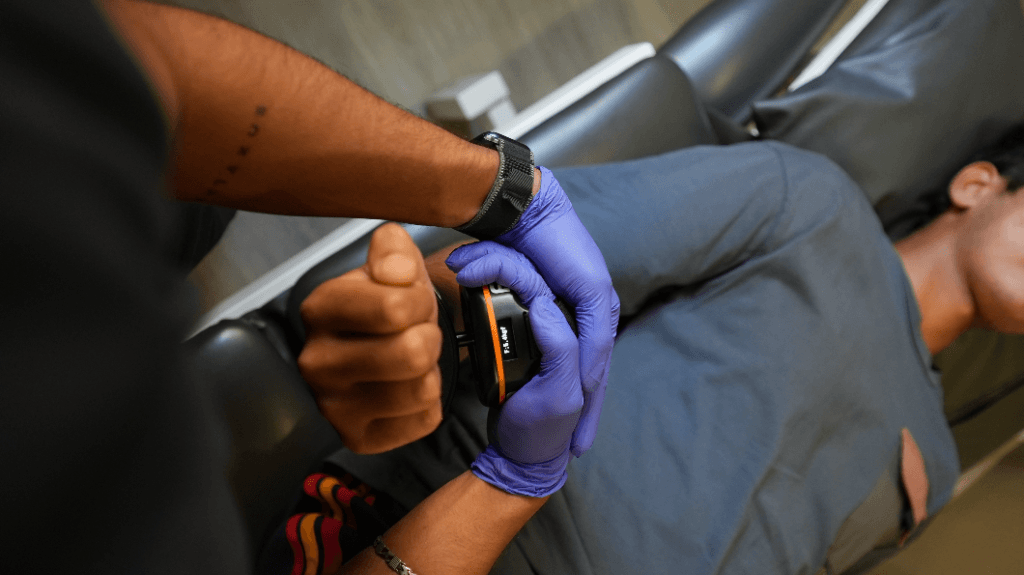
Digital handheld dynamometry isolating peak isometric strength and neuromuscular force output at Zen Physio Nashik.
Common Symptoms
- Persistent strength loss, power deficits, or sudden 'giving way' during high-intensity athletic acceleration and cutting.
- Noticeable limb-to-limb force imbalance or compensatory movement faults developed post-injury or surgery.
- Arthrogenic Muscle Inhibition (AMI) where injured muscle groups fail to fire fully despite structural tissue healing.
- Unresolved performance plateaus, early muscular fatigue, or recurring minor muscle strains during sport-specific drills.
Biomechanical Causes
Following acute sports trauma, joint effusion and nociceptive signaling trigger Arthrogenic Muscle Inhibition (AMI)—a protective neurological reflex where the central nervous system downregulates alpha motor neuron recruitment. Left unmeasured, subtle strength asymmetries (>10-15% deficit) overload secondary kinetic chains and drastically elevate re-injury risk. Clinical Muscle Testing and digital handheld dynamometry isolate individual muscle bellies and calculate bilateral symmetry for ACL Reconstruction, Muscle Strain Recovery, and Return-to-Sport Clearance (such as the Hamstring:Quadriceps ratio), and establish objective data-driven return-to-sport benchmarks.
What to Expect:
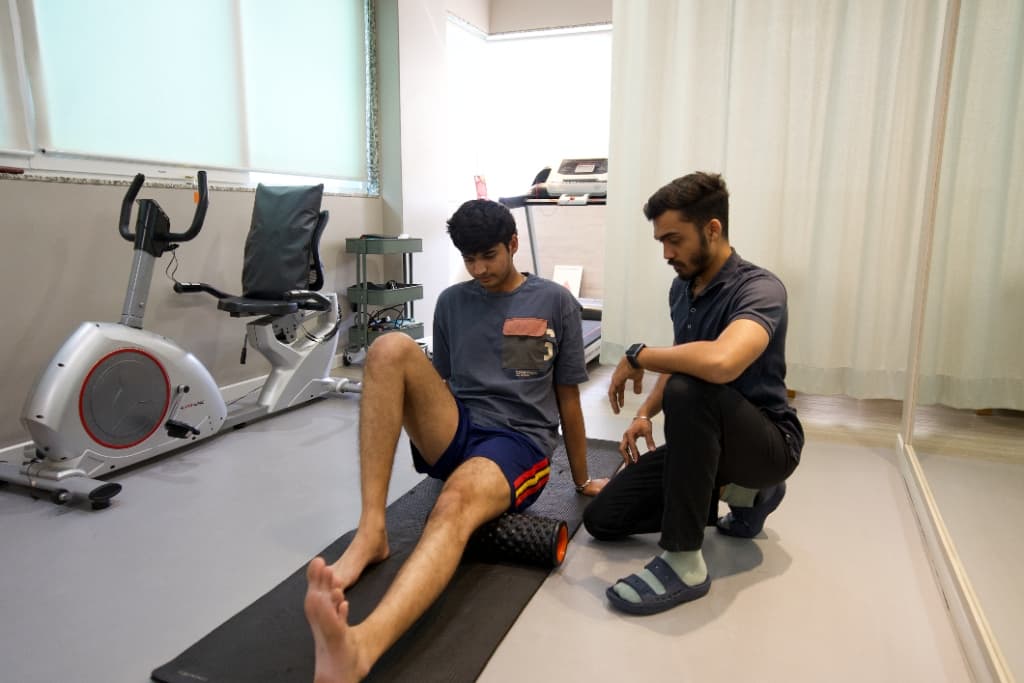
A dedicated 1-on-1 athletic strength evaluation combining standardized manual muscle testing (Medical Research Council 0-5 grading), multi-angle break tests, and digital dynamometry to calculate peak force and bilateral symmetry. Your sports physiotherapist delivers immediate diagnostic findings and formulates a targeted neuromuscular loading protocol tailored to your athletic discipline.
Treatment Benefits & Objectives:
- Pinpoints hidden bilateral strength asymmetries and isolated muscle inhibition before they lead to re-injury.
- Quantifies objective Limb Symmetry Index (LSI > 90%) essential for validated return-to-play clearance.
- Determines angle-specific isometric peak torque and agonist-to-antagonist muscular balance.
- Guides targeted neuromuscular facilitation, progressive eccentric loading, and sports-specific resistance programming.
Recovery Path Milestones
Isolated Muscle Grading & Neural Firing Screen
Standardized manual muscle testing (MMT 0-5 scale) to assess neuromuscular activation, pain response, and joint-position stability.
Digital Handheld Dynamometry & Peak Force Testing
Quantifying objective isometric force output in Newtons/kg and determining precise bilateral limb symmetry ratios.
Multi-Angle & Dynamic Agonist-Antagonist Balancing
Evaluating force production across critical athletic joint angles (e.g., deep knee flexion, hip extension) and assessing rate of force development (RFD).
Return-to-Sport Metric Validation & Clearance
Confirming >90% Limb Symmetry Index (LSI), functional power endurance, and sports-specific explosive clearance.
Frequently Asked Questions
Ready to Resolve Muscle Testing?
Book a personalized 1-on-1 diagnostic evaluation and treatment plan for Muscle Testing today.